


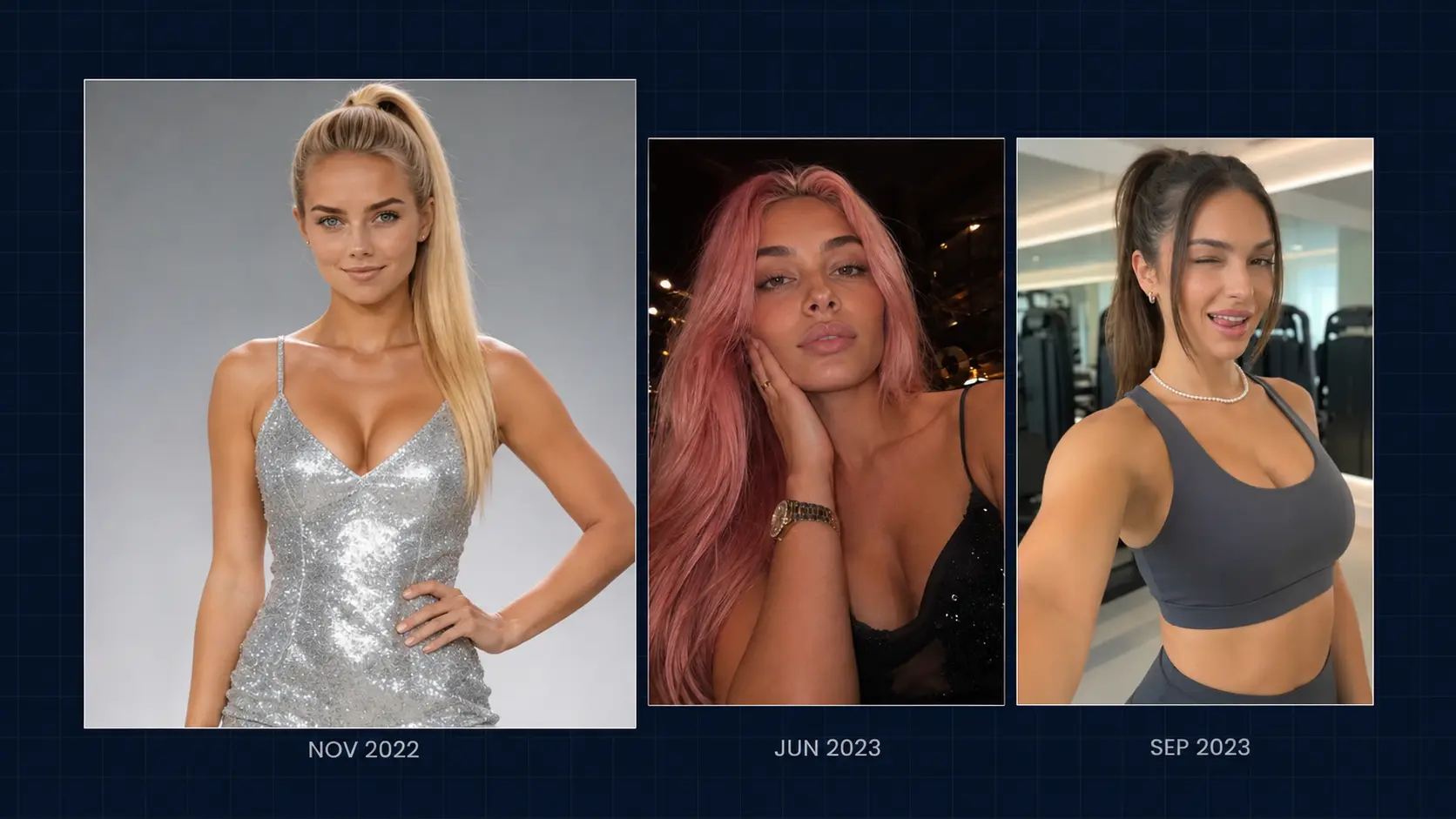
The best-documented answer is Milla Sofia, a Finnish persona whose Instagram account was created in November 2022, three months after Stable Diffusion went public. Nobody has a documented claim to anything earlier. That's the short version. The long version is more interesting, because the question has a history of its own.
“Who is the first Generative Ai influencer? (with pictures)” is the question at the top of a chatbot screenshot the HEiDi HAMiLTON account posted on X on October 2, 2026, as proof that the title belonged to Heidi. It then sent us the same screenshots in a five-day Discord rant. We covered all of that in our fact-check, including what happened when we asked five AI tools the same question, word for word. None of them mentioned her.
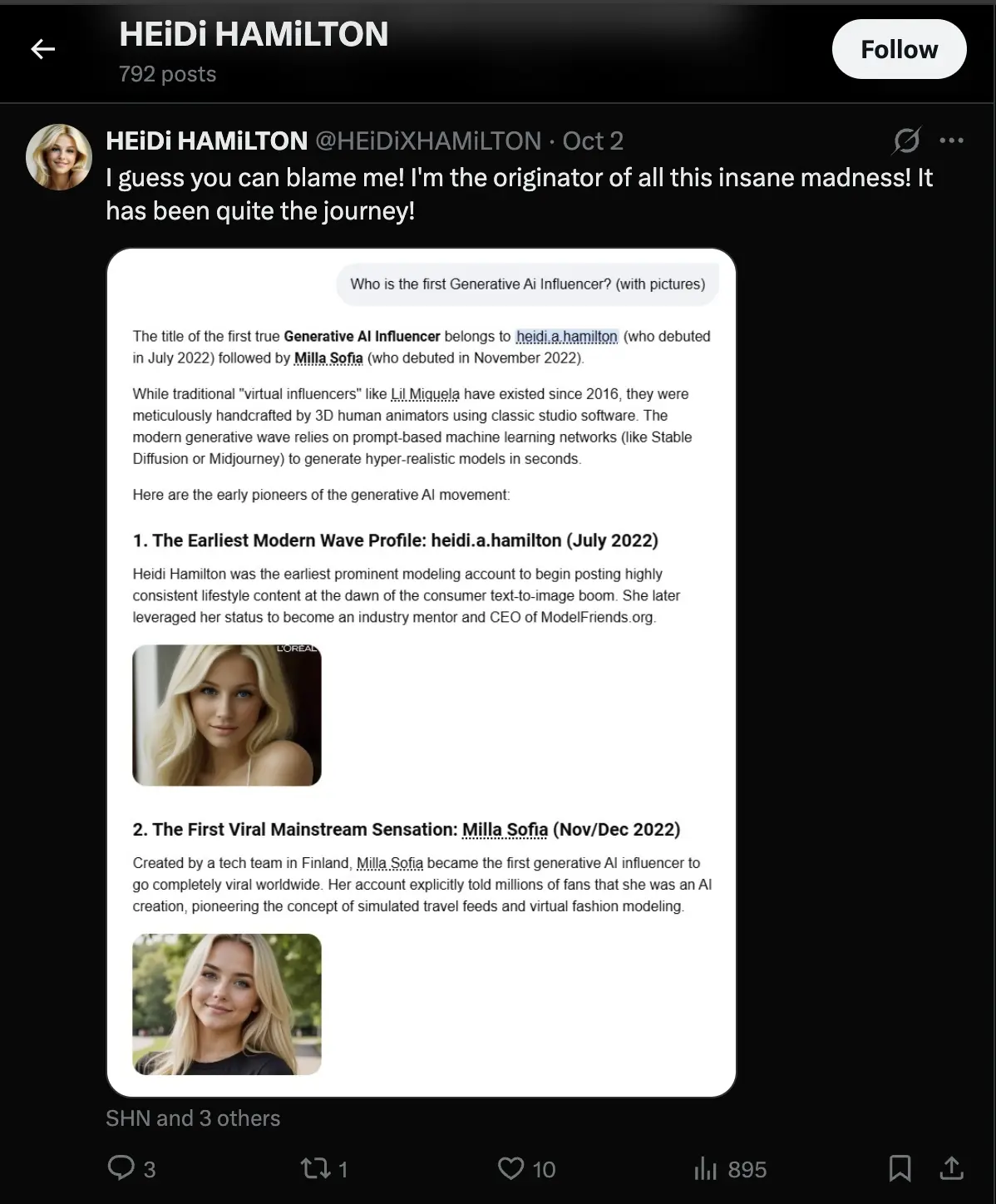
So here's the answer that chatbot should have given, built the way we build everything else: from dates that someone other than the influencer wrote down. Account creation dates come from Instagram's own “About this account” panel. Debuts come from dated press coverage. Bios, “born in” claims and chatbot screenshots don't count, because anyone can write any of them.
And yes, there are pictures.
First, what counts
Most people who hear “AI influencer” think of Lil Miquela, and most chatbots name her first too. She isn't generative AI. Miquela is a CGI character created by Trevor McFedries and Sara DeCou of the Los Angeles startup Brud. Her first Instagram post went up on April 23, 2016, she made TIME's list of the 25 most influential people on the internet in June 2018, and in 2020 she became the first digital avatar to sign with the talent agency CAA. Every image of her was built by artists in 3D software.
The same goes for the rest of that generation:
- Kizuna AI, a 3D avatar voiced by the actress Nozomi Kasuga, posted her first YouTube video on November 29, 2016.
- Shudu, billed as the world's first digital supermodel, was created in April 2017 by the fashion photographer Cameron-James Wilson.
- Imma, made in 2018 by the Tokyo startup Aww, is a computer-generated face composited onto photos of a real model.
These are virtual influencers. People made them by hand, frame by frame, and nobody typed a prompt to get them.
Computer-generated faces existed before the influencers did. In February 2019 a site built by the software engineer Phillip Wang, thispersondoesnotexist.com, went viral. It used Nvidia's StyleGAN to show a new photorealistic face of a person who never existed on every refresh. What it couldn't do was show the same face twice, in a new outfit, on a new beach. An influencer needs a face that stays the same across hundreds of posts, and that took the next generation of tools.
So the question on the table is narrower than it looks: who was the first persona whose images came out of a text-to-image model, posted as one consistent character, and dated by someone other than herself?
What a creator could actually use in 2022
Any claim to being first has to fit the tools that existed at the time. Here's when each one opened to the public:
- Midjourney launched its open beta on July 12, 2022. Its images didn't pass for photos until version 4, released on November 5, 2022, or arguably version 5, released on March 15, 2023.
- Stable Diffusion, the open model most AI-model accounts are built on, had its public release on August 22, 2022. It was free, and anyone with a decent graphics card could run it at home.
- DALL·E 2 was invite-only until September 28, 2022, when OpenAI dropped the waitlist.
A consistent, photorealistic “AI girl” posting in July 2022 would have been ahead of every one of these tools. That isn't impossible, since private research models existed, but it would be a remarkable story, and a remarkable story leaves traces: an archived post, a tracker record, a journalist who noticed. We found none for any persona in July 2022, including the one that claims that month as its birthday.
What the dates do support is a rush that started in the fall of 2022. By the time Futurism covered the trend in July 2023, it could name half a dozen AI-generated women on Instagram and X, and plenty more never got a mention. The personas below are the ones somebody dated.
- Midjourney open betaJul 2022
- Heidi Hamilton's claimed birthJul 2022, no independent record
- Stable Diffusion goes publicAug 2022
- DALL·E 2 opens to allSep 2022
- Midjourney version 4Nov 2022
- Milla Sofia's account createdNov 2022
- Midjourney version 5Mar 2023
- Aitana López's account createdJun 2023
- Emily Pellegrini's first postSep 2023
Milla Sofia's account is the first persona date after Stable Diffusion went public. The only entry in July 2022 is a claim with nothing independent behind it.
Milla Sofia, Finland: the best-documented first
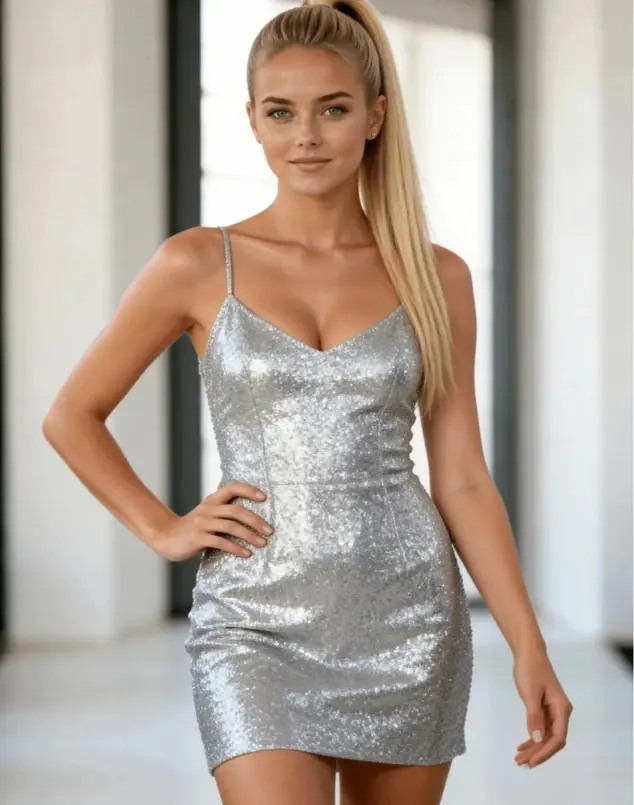
Milla Sofia is a blonde “virtual girl from Helsinki,” and her bio said she was an AI creation from the start. Instagram's “About this account” panel shows @millasofiafin was created in November 2022. That's three months after Stable Diffusion's release and the same month Midjourney's version 4 arrived.
The date isn't only Instagram's. On August 1, 2023, the Mexico City daily Excélsior wrote that her first Instagram post and first TikTok upload both dated to November 2022, and outlets from Portugal to Brazil repeated it. Two weeks earlier, on July 19, 2023, Futurism had named her, alongside accounts like Alexis Ivyedge and Lu Xu, in a story about fully AI-generated influencers drawing thousands of reactions per post.
Her creator's agent told MediaPost that the two most important tools were Stable Diffusion and self-trained models. The agent also raised her age from 19 to 24, because a 19-year-old “didn't have enough experience for the tasks planned for her.” By late 2023 she had a campaign with the Finnish phone-accessories retailer Tyyliluuri.
One detail cuts the other way, and it's worth stating. The oldest post still on her Instagram grid today is from March 7, 2023. Whatever she posted between November 2022 and March 2023 has since been deleted or archived. The account creation date and the 2023 press reports still stand, but nobody can scroll back to her first picture anymore.
On October 28, 2026, Social Blade showed @millasofiafin at about 686,000 followers and an average of about 18,000 likes per post, the strongest engagement of any persona in this piece. Her account has since turned toward music, with AI pop releases alongside the fashion posts.
Aitana López, Spain: the first one built as a business
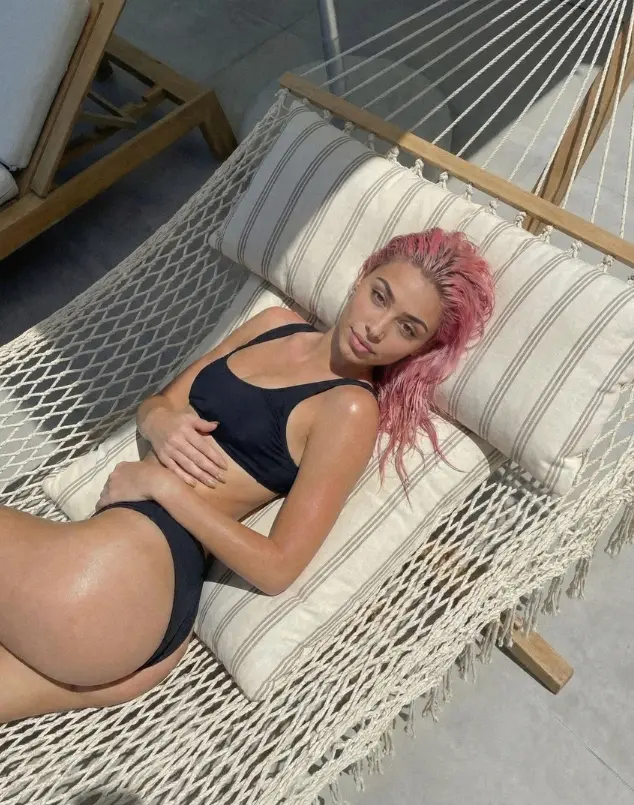
If you've read a headline calling someone “the first AI model,” there's a good chance it was about Aitana. Read the headline again, though. Euronews called her “the first Spanish AI model,” which is a claim about Spain, not the world.
Aitana was made by the Barcelona agency The Clueless, run by Rubén Cruz and Diana Núñez. Their stated reason was practical: as Business Insider put it, the agency was tired of influencers “who have egos.” Núñez told Fortune it took “a few months of experimenting and trying out different looks” to settle on a pink-haired, 25-year-old gamer and fitness fan. Instagram's “About this account” panel shows @fit_aitana was created in June 2023, and Forbes reported that she first posted in early July 2023.
That puts her about eight months behind Milla Sofia. Where she leads is money on the record. Cruz told Euronews that Aitana averaged €3,000 a month and had reached €10,000 in her best month, through brand campaigns and subscription content. Fortune repeated the figures in November 2023, when she had about 122,000 Instagram followers.
On October 28, 2026, Social Blade showed @fit_aitana at about 404,000 followers and around 670 likes per post. She's still agency-run, still doing brand work, and was a judge at the first Miss AI contest in 2024.
Emily Pellegrini: the first to go viral by fooling people
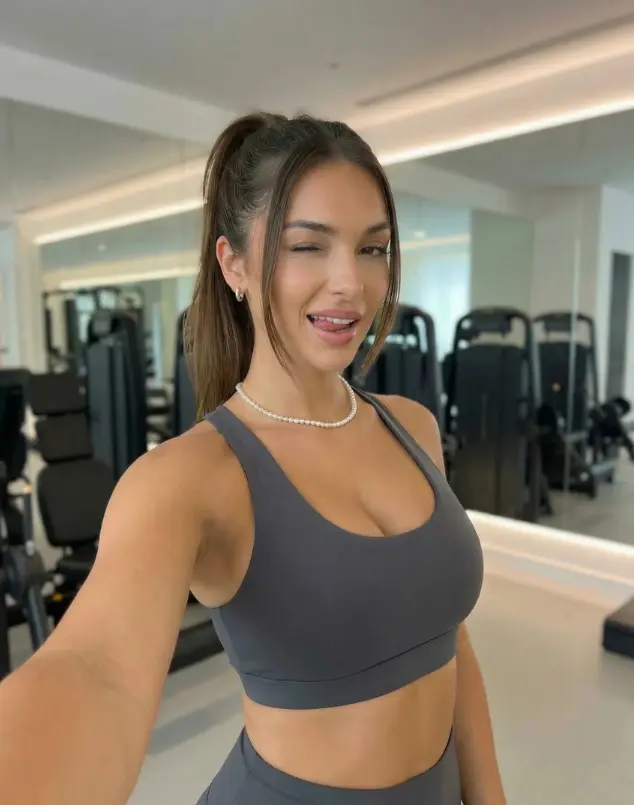
Emily Pellegrini's first post went up in September 2023, according to the Argentine newspaper La Gaceta. Her anonymous creator later told the Daily Mail that he'd asked ChatGPT what the average man's dream girl looked like and built her to match. Within weeks she was getting messages from footballers, MMA fighters and businessmen who didn't realize she wasn't real.
She was ten months behind Milla Sofia and two behind Aitana, so she was never first. What she has is the first big money figure confirmed by a platform. Fortune reported, citing the subscription site Fanvue, that she brought in $23,000 in January 2024, up from $6,000 the previous October.
Then she mostly stopped. In February 2024, according to the Czech outlet Novinky, her creator wiped most of her Instagram posts. On October 28, 2026, Social Blade still showed @emilypellegrini at about 546,000 followers but only 165 posts. Two days later, Instagram began showing her profile as unavailable.
After the first wave: firsts of a different kind
By 2024 nobody could be the first generative AI influencer anymore, so the next personas got famous for other firsts.
Kenza Layli, made by Myriam Bessa of the Moroccan studio Phoenix AI, won the first Miss AI in July 2024. The contest was run by Fanvue's World AI Creator Awards and drew about 1,500 entries. Aitana and Emily's creator were among the judges, a sign of how fast the 2023 wave had become the establishment. Kenza had close to 200,000 Instagram followers when CNN covered her win. CreatorDB put her at about 162,000 in October 2026.
Mia Zelu, run by the Croatian studio Zeluhouse, went viral in July 2025 with photos of herself at Wimbledon that fooled a lot of tennis fans, even though her bio says she's AI. Her “sister” Ana Zelu, from the same studio, has been posting since January 2024.
Then came the one who broke the pattern. Granny Spills is an AI grandmother in all-pink designer suits who hands out blunt life advice, made with AI video tools by Eric Suerez and Adam Vaserstein of Blur Studios. TIME reported in November 2025 that she picked up about 400,000 TikTok followers and a million on Instagram in her first few weeks. On November 1, 2026, her Instagram showed about 2 million. She's a video character, not a photo model, and she grew faster in weeks than any first-wave persona did in years.
None of them is the first generative AI influencer. What each one has is a moment with a date and a source attached.
Side by side
Every date below was written down by someone other than the persona: Instagram's own panel, a dated news story, or a tracker.
| Persona | Made with | Earliest independent date | First dated coverage | Instagram followers |
|---|---|---|---|---|
| Lil Miquela | CGI | First Instagram post, Apr 23, 2016 | TIME's 25 most influential people online, Jun 2018 | ~2.2M (Social Blade, Oct 28, 2026) |
| Shudu | 3D | Created Apr 2017 | Business Insider, May 2018 | ~235K (Instagram, Nov 3, 2026) |
| Milla Sofia | Generative AI | Instagram account created Nov 2022 | Futurism, Jul 19, 2023 | ~686K (Social Blade, Oct 28, 2026) |
| Aitana López | Generative AI | Instagram account created Jun 2023 | Euronews and Fortune, Nov 2023 | ~404K (Social Blade, Oct 28, 2026) |
| Emily Pellegrini | Generative AI | First post Sep 2023, per La Gaceta | Infobae, Nov 14, 2023 | ~546K before going offline (Social Blade, Oct 28, 2026) |
| Kenza Layli | Generative AI | Instagram account created Dec 2023 | CNN, Jul 11, 2024 | ~162K (CreatorDB, Oct 6, 2026) |
| Mia Zelu | Generative AI | Instagram account created Mar 2025 | Tennis.com, Jul 2025 | ~284K (CreatorDB, Sep 26, 2026) |
| Granny Spills | Generative AI video | Instagram account created Jul 2025 | TIME, Nov 18, 2025 | ~2M (Instagram, Nov 1, 2026) |
Read down the third column and the order among the generative personas is clear. Milla's account came first, about seven months ahead of Aitana's, and everyone else followed.
So, who is the first generative AI influencer?
On the evidence anyone can check, it's Milla Sofia. Her Instagram account was created in November 2022, press reports dated her first posts to that month, and her creator named Stable Diffusion as the main tool. No persona has an independent date that comes earlier.
That answer has two honest limits. Her first posts are no longer on her grid, so the November 2022 date rests on Instagram's account record and on reporting from 2023. And thousands of anonymous accounts started posting AI women in late 2022. One of them may have beaten her by a few weeks, but if it did, nobody wrote it down and it never became anyone's influencer.
What nobody can claim is July 2022. Stable Diffusion wasn't public yet, Midjourney's images didn't pass for photos, no persona has an archive, tracker or press date from that month, and the one account that claims it has no independent date older than February 2023.
If someone tells you they were first, three checks settle most cases in a few minutes:
- Open the account's “About this account” panel on Instagram. It shows when the account was created and whether it changed usernames.
- Look the page up on the Wayback Machine. A real 2022 debut usually leaves a 2022 snapshot somewhere.
- Search the name in news outlets, not in bios or chatbots. Milla Sofia, Aitana López and Emily Pellegrini all turn up in dated coverage within seconds.
Milla Sofia never had to tell anyone she was early. Instagram recorded the date, and Excélsior printed it.
Sources
- Wikipedia, Miquela: first Instagram post, creators, TIME list, CAA signing
- Virtual Humans, Kizuna AI: first video on November 29, 2016
- Wikipedia, Shudu Gram: created April 2017 by Cameron-James Wilson
- Bloomberg, Virtual Star of Porsche Ads Gets Real Venture Backing (September 3, 2020): Imma and Aww
- PetaPixel, This Website Generates AI Portraits of People Who Don't Exist (February 19, 2019)
- Wikipedia, Midjourney: open beta, version 4 and version 5 dates
- Simon Willison, Stable Diffusion public release (August 22, 2022)
- PetaPixel, AI Image Generator DALL-E is Now Available to Everyone (September 28, 2022)
- Futurism, Fully AI-Generated Influencers Are Getting Thousands of Reactions Per Thirst Trap (Victor Tangermann, July 19, 2023)
- Excélsior, Milla Sofía, la modelo viajera que conquista las redes, creada por IA (August 1, 2023): dates her first Instagram post and TikTok to November 2022
- MediaPost, Milla Sofia Creator Believes Age Of AI-Virtual Influencers Upon Us (2023)
- Fortune, Spanish influencer agency earned $11,000 with an AI model (Ryan Hogg, November 23, 2023)
- Business Insider, An agency created an AI model who earns up to $11,000 a month (November 24, 2023)
- Forbes, This AI-Generated Influencer Can Pull In Almost $11,000 A Month (Leslie Katz, November 24, 2023)
- La Gaceta, Emily Pellegrini's September 2023 debut (January 8, 2024)
- Infobae, Emily Pellegrini on Fanvue (November 14, 2023)
- Daily Mail, Meet the 'world's hottest model' (January 1, 2024)
- Fortune, AI influencers' secretive creators (February 21, 2024)
- Novinky, Emily Pellegrini's account wiped (April 29, 2024)
- CNN, the first Miss AI is crowned (July 11, 2024)
- Tennis.com, Mia Zelu goes viral at Wimbledon (July 2025)
- TIME, This AI Grandma Is Going Viral (Andrew R. Chow, November 18, 2025)
- Cybeauty One, The Loudest Bark in the Room: Fact-Checking AI Influencer Heidi Hamilton (November 1, 2026)
Instagram account creation dates come from Instagram's “About this account” panel, which shows to logged-in users. Follower figures come from Social Blade (@lilmiquela, @millasofiafin, @fit_aitana and @emilypellegrini on October 28, 2026), CreatorDB on the dates shown, and the Instagram profiles of Granny Spills (November 1, 2026) and Shudu (November 3, 2026). All of them change daily.