



A fan writes: “Can you make me something for my birthday?” On most creator pages, that message starts a negotiation. What kind of something? How much? By when? Does the fan pay first, or after they see it? Ten messages later the creator has quoted a price, the fan has asked for a discount, and nobody has written down what was agreed.
Custom requests are worth getting right because they're priced per piece. A $40 custom item brings in as much as four months of a $10 subscription, from one fan, in one sale. The trouble is how most creators sell them: one chat at a time, with the price, the details and the payment scattered across a conversation.
This guide is about Fanvue, a creator subscription platform that allows AI creators, and about RequestDesk, an app developed by related studio Viral Mind Technologies to manage custom requests there. The habits behind it work on any platform.
Where selling in DMs goes wrong
Most problems with custom requests trace back to one of four things.
The price moves. When every price is quoted in chat, every price is open to negotiation. Fans learn that the first number is a starting point, and the creator spends the evening defending it.
The work starts before the money arrives. “I'll pay when it's done” sounds reasonable from a fan who has been subscribed for a year. Sometimes the payment never comes, and the hours are gone.
The details get lost. A fan asks for a birthday voice note, mentions their name in one message, the date in another and the tone they want three days later. Whoever answers the chat, the creator or a chatter, has to rebuild the order from scrollback.
Nothing is in writing. When a fan disputes a payment, the question is always the same: what did you agree to deliver, and when? A chat thread is a poor record. A refund or a chargeback (a payment the fan's bank reverses) costs more than the lost sale, because the work has already been done.
What a menu changes
A menu turns each of those problems into a setting.
The price is published, so there's nothing to negotiate. The fan pays before they describe what they want, so no work starts unpaid. The questions are part of the order, so the details arrive in one place, in the form you asked for. And the order itself is the record: what was bought, for how much, with which brief and which deadline.
None of this is new in retail. A café doesn't negotiate the price of a cappuccino with each customer.
How RequestDesk works
RequestDesk adds a custom-request menu to a Fanvue profile. It runs inside Fanvue as an app from the Fanvue App Store, and fans order and pay through Fanvue's own checkout.
You start by building the menu. A menu holds up to 10 items, each with a price between $3 and $500, a delivery time between 1 and 30 days, and the questions the fan has to answer. A personal voice note might ask for a name and the occasion. A themed photo set might ask “Which outfit?” with a few options to pick from.
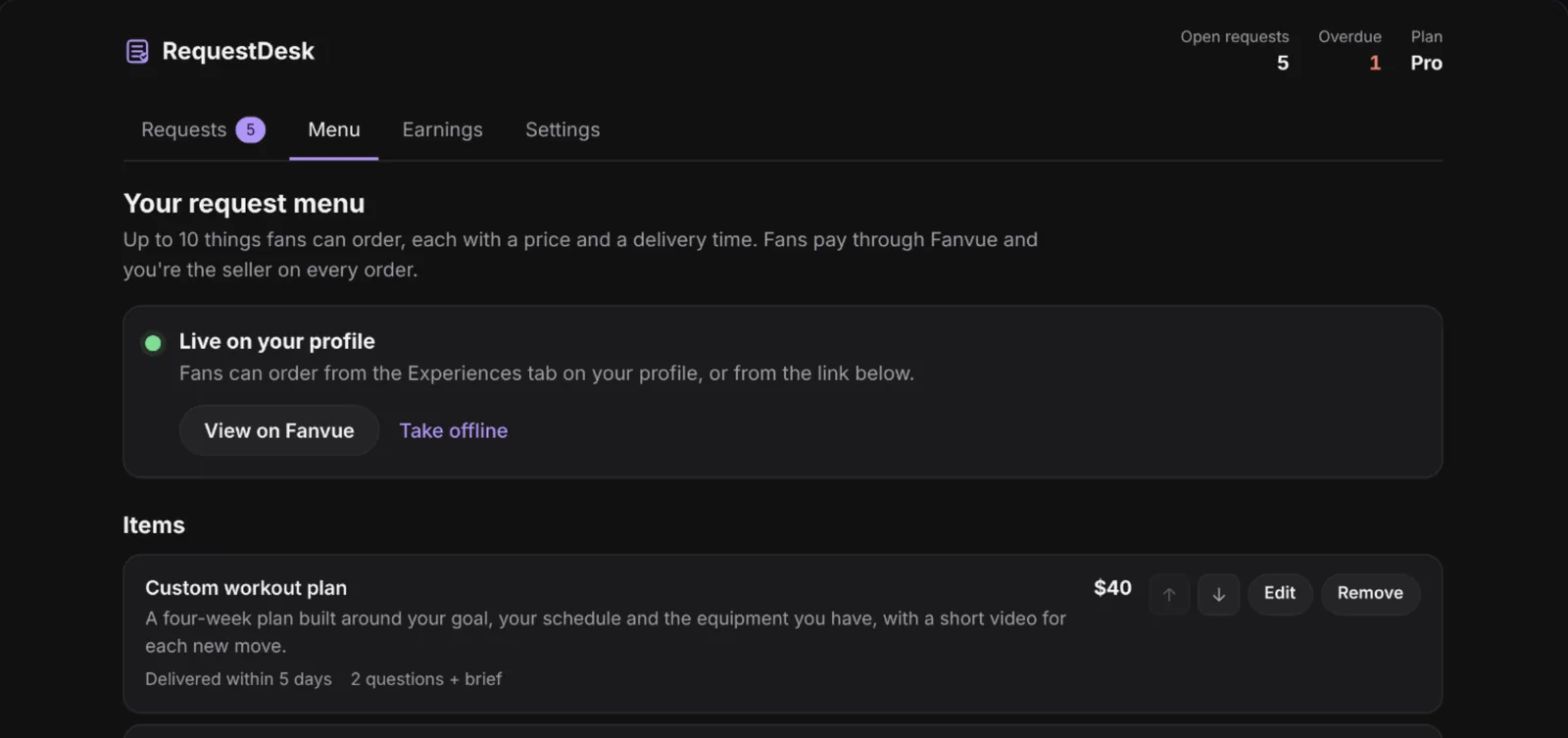
Then you publish it. One click puts the menu on your Fanvue profile, and you choose who can order: anyone signed in to Fanvue, or only your subscribers. Fanvue reviews the menu, and RequestDesk shows the review status, so if something needs changing you can fix it and resubmit.
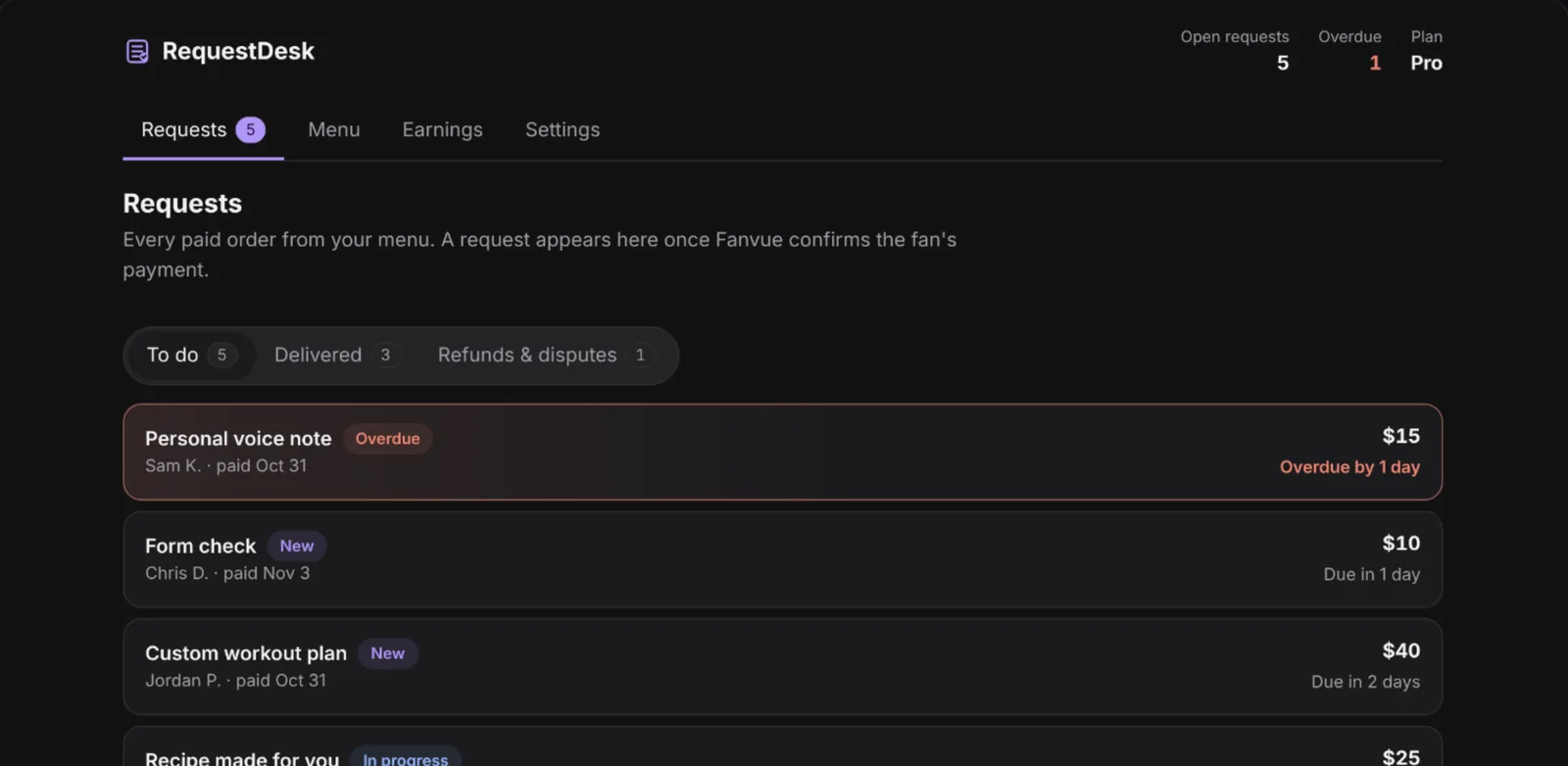
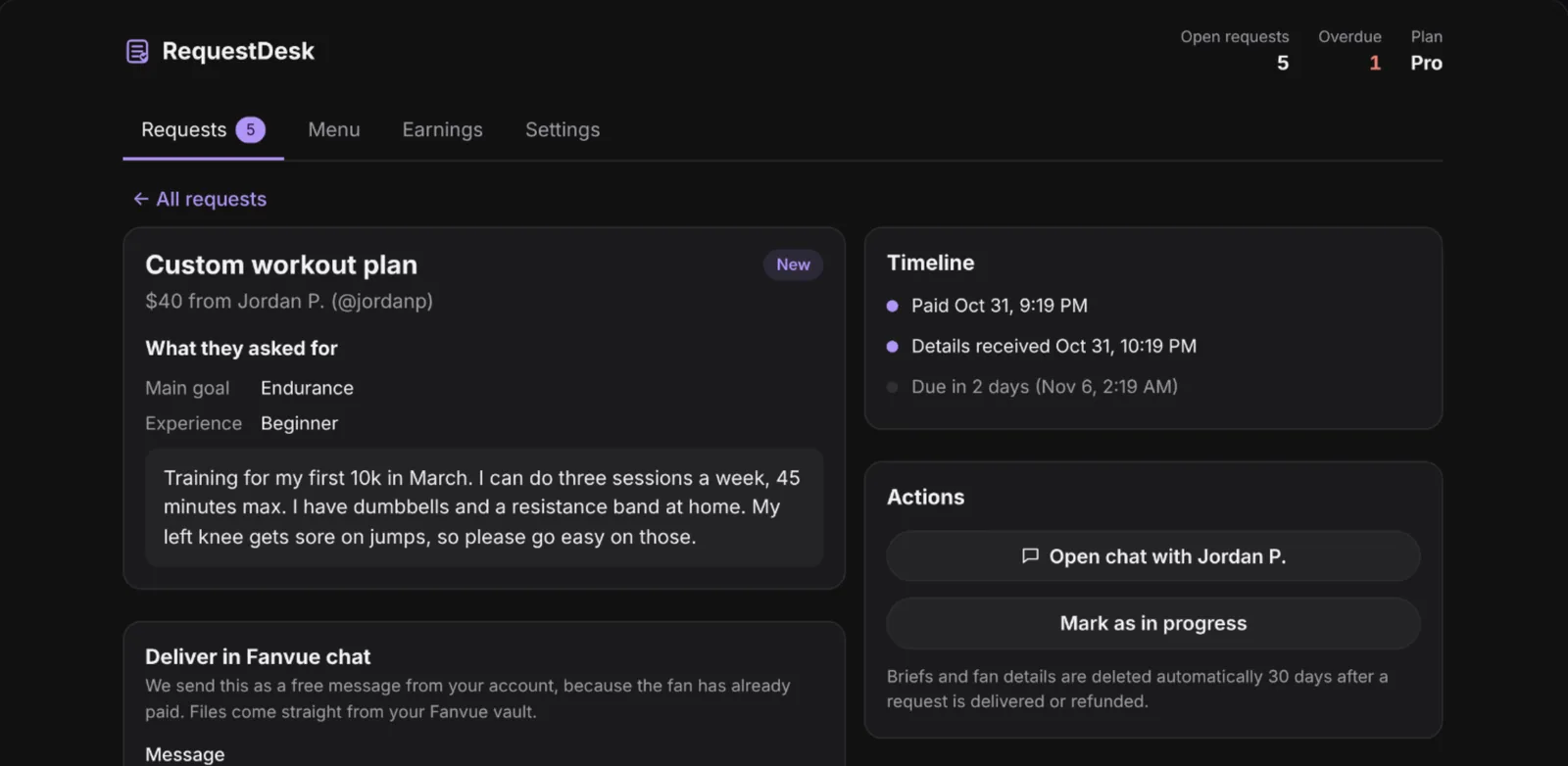
When a fan orders, they pay first, in Fanvue's checkout, and then fill in the brief. A request only appears in your queue once Fanvue confirms the payment. The delivery clock starts when the fan sends their details, not when they pay, because you can't start before you know what they want.
To deliver, you open the request, write a message, pick the files from your Fanvue vault and press Send. The files go to the fan's Fanvue chat as a free message, because the fan has already paid, and the request moves to Delivered. RequestDesk never downloads or copies your media.
What to put on your menu
Start with items you can make reliably and on time. A short menu you always deliver on is easier to keep than a long one that runs late.
Good first items are things fans already ask for in DMs: a personal voice note for a birthday or a pep talk, a themed photo set with a choice of setting, a short custom video. Creators outside lifestyle content can sell the same way: a fitness creator can offer a custom workout plan, a food creator a recipe written for one fan's diet.
Ask only the questions you need to make the item. Every extra question is one more reason for a fan to stop halfway. Multiple-choice questions are faster to answer than open ones, and they keep the brief inside what you can actually make.
Set delivery times you can keep in a bad week. Overdue requests stand out in your queue, and the fan can check the expected date at any time. A three-day promise kept is worth more than a one-day promise missed.
AI creators should describe each item the way they describe the persona: as AI-made. A fan who orders a voice note from an AI persona should know the voice is synthetic before paying for it, and the item description is the place to say so.
Refunds and disputes
Refunds stay with Fanvue. When Fanvue refunds a fan, or a payment is disputed or reversed, RequestDesk moves the request to Refunds & disputes on its own, so the queue always shows what's still owed and what isn't.
What RequestDesk adds is the record. Each request keeps the item, the price, the fan's answers, the time they paid, the time they sent their details and the due date. If a fan says they never got what they ordered, the timeline shows when it was delivered. RequestDesk also re-checks your orders with Fanvue on a schedule, so a payment notification that goes missing doesn't turn into an order nobody sees.
What it costs
RequestDesk has two plans, billed and cancelled through Fanvue.
The Free plan covers one menu item and up to five requests a month, with the full queue, delivery in chat and earnings. When the fifth request comes in, the menu tells fans you're fully booked until next month, so you never take on more than the plan allows.
Pro costs $9.99 a month and allows up to 10 items and unlimited requests.
On both plans RequestDesk takes no share of your sales. You're the seller on every order, and fans pay you at Fanvue's standard fee. One $15 voice note a month covers Pro, even after Fanvue's fee.
Getting started
Give it a month. Put one item on the Free plan, the thing fans ask for most often in your DMs, and point the next fan who asks to the menu instead of quoting a price.
Earnings shows requests and revenue for each item, this month and last. If the first item sells, add a second. If it doesn't, change the price or the item before adding more.
Custom requests sell well around Black Friday, when fans are already in a buying mood. For timing, offer design and Fanvue's dispute rules over the holidays, read the BFCM '26 Report.
See RequestDesk features, screenshots and pricing at Viral Mind Technologies